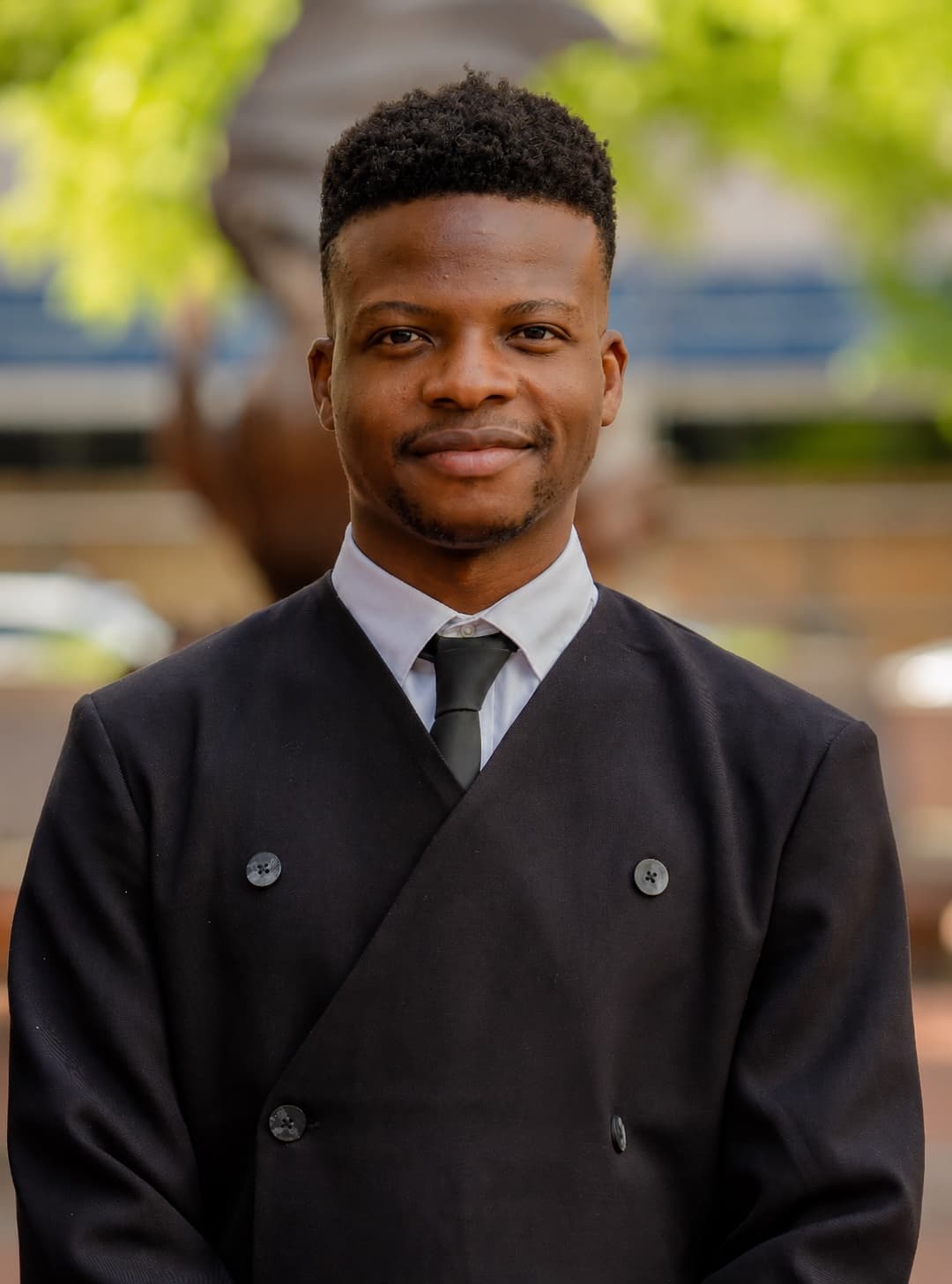
I ran for Cornell Tech Student Government Professional Co-President in Fall 2026. I did not win the election. This page now preserves the campaign, the ideas behind it, and what I learned from the experience.
Ayomide OribamiseJohnson Cornell Tech MBA · 2026 candidate for Professional Co-President
The governing idea
Solve now. Build to last.
2026 campaign platform
What I ran on.
These were campaign proposals, not current promises. They remain here as a record of the problems I believed student government should help solve.
01
From Day One
Make opportunities, resources, and student government useful earlier.
Too much of the Cornell Tech experience depends on knowing who to ask, hearing about something at the right moment, or figuring it out yourself. Students should have clearer information and quicker routes to useful people, resources, opportunities, and issue owners.
Discover opportunities earlierMake useful opportunities and resources easier to find before they pass.
Find the right ownerHelp students reach the right person instead of navigating every issue alone.
Give incoming students a stronger startProvide useful context from day one.
Stop rediscovering answersPreserve useful contacts and answers so each cohort can build on what came before.
02
One Cornell Tech
Create more useful connections between programs, alumni, industry, and the wider Cornell community.
Strong program communities can still leave students moving in parallel. People, knowledge, and opportunities should move more easily across programs without weakening the communities students already have.
Cornell Tech Tables: small rotating cross-program conversations.
Teach Me Something: short peer-led sessions that open one discipline to another.
Open the Network: stronger bridges to alumni, industry, and relevant Cornell communities.
03
Close the loop
Students should know who heard an issue, who owns it, where it stands, and what happened next.
The campaign did not promise that every issue would receive the answer students wanted. It proposed something more accountable: visible ownership, visible status, and a response.
Heard
Assigned
In progress
With Cornell
Resolved / closed
2026 campaign proposal
Build systems the next administration can inherit.
Solve now. Build to last. The proposal began with helping current students solve current problems. It also asked CTSG to preserve what it learned, who owned an issue, and what worked so students would not keep rebuilding the same answers from scratch.
Institutional memory
Our programs may last one or two years. Our institutions should not have one-year memories.
If one class learns which Cornell contact can solve an issue, how an event gets funded, or which alumni relationship opened a door, the next class should inherit that knowledge. Contacts, deadlines, templates, lessons, and unfinished initiatives should not have to be rediscovered.
Preserve key contacts, event histories, and funding knowledge.
Document lessons learned and unfinished initiatives.
Maintain clear ownership of recurring processes and resources.
The next CTSG should start where the previous one finished, not where it started.
One source of truth
One maintained CTSG website.
Students should not have to guess which CTSG website, form, or resource is current. The campaign proposed preserving useful material from older properties, verifying it, and bringing it into one maintained student-government website.
01
Audit
Identify what is current and what useful information exists across both sites.
02
Consolidate
Move verified resources into one canonical CTSG site.
03
Maintain
Give the site clear ownership, an update cadence, and redirect or archive legacy properties where possible.
Route the issue to the right owner. Then close the loop.
No Co-President can understand every program alone. The campaign argued that the Executive Board should make Program Representatives more powerful, not replace them.
Co-Presidents → AdministrationCampuswide policy or escalation
03Status / ResponseOwnership, current status, and what happens next
The loop closes when the student hears what happened.
What I learned
Representation begins with listening for outcomes.
Running for student government taught me more about Cornell Tech than I expected.
I began the campaign thinking primarily about what student government could do. I ended it thinking much more deeply about how student government should listen, represent, and operate.
01
Differences should reach the table.
A one-year MBA student recruiting immediately has a different experience from a first-year Health Tech student preparing for a summer internship. A second-year Jacobs student approaching graduation has different priorities again.
International students may be navigating immigration and employment uncertainty. Founders may be looking for customers, capital, or collaborators. Researchers, career switchers, engineers, lawyers, designers, and students entering public-sector work may all need something different from the same institution.
Good representation does not flatten those differences. It creates a way for those differences to reach the table.
02
Listen for where people are losing time.
Some of the most useful insights did not come from asking, “What should student government do?” They came from ordinary conversations about what students were trying to accomplish, what they were struggling to find, and where they were losing time.
Often, the resource existed. Someone simply did not know it existed, discovered it too late, did not know who owned the issue, or did not know how to get from a problem to the right person.
03
Make representation more powerful at the edges.
During the campaign, I met with Program Representatives and learned much more about how different cohorts experience Cornell Tech.
The people closest to a cohort should be able to surface an issue, get it to the right owner, and come back to their classmates with an answer. The job of an Executive Board should not be to replace Program Representatives. It should make their representation more powerful.
04
Measure movement, not activity.
Events, meetings, emails, and initiatives can matter. But a more useful standard is whether a student moved closer to the outcome they needed.
Did someone find the right employer?
Did an international student reach qualified immigration support quickly enough?
Did a founder meet someone useful?
Did a student concern reach the person who could act on it?
Did an issue receive a response?
05
Advocacy is not the same as promising an outcome.
Cornell is a large institution. A reasonable request can still involve multiple decision-makers, existing policies, budgets, legal constraints, academic authority, and competing priorities.
Change requires understanding who has authority, building support, bringing evidence, finding workable compromises, and knowing when to keep pushing.
06
Solve today. Preserve what you learn.
Current students should never sacrifice their experience just so the next class benefits. Continuity should come from preserving what we learn while solving today’s problems.
A student organization should not repeatedly rediscover the same contacts, funding processes, administrative owners, event lessons, and problems.
07
The campus became larger and smaller.
The most valuable part of running was having a reason to speak with people across Cornell Tech whom I probably would not otherwise have met: Computer Science, Health Tech, Urban Tech, Design Tech (DT), Connective Media, ECE, ORIE, DSDA, Law, and MBA.
Cornell Tech felt larger because there is far more happening here than any one student sees. It felt smaller because many of the people we need are often only one introduction away.
After the result
I did not win the election.
Naturally, I would have preferred a different result. But I am glad I ran.
The campaign forced me to listen more carefully, sharpen how I think about representation, meet people outside my normal circles, and articulate what I believe good student institutions should do.
Elections determine who holds an office. They do not determine whether the ideas, relationships, or lessons built during a campaign remain useful.
I hope some of these ideas continue to be useful to Cornell Tech, regardless of who originated them.
Archived campaign plan
Where I said we would start.
30First 30 days
Meet directly with every Program Representative to understand the highest-priority issues in each program, identify their owners, and establish a working cadence between Program Reps, the Co-Presidents, Executive Board, and Student & Academic Affairs. Identify which issues can be resolved quickly and which require longer-term work.
60By 60 days
Make CTSG priorities and representation pathways clearer. Begin publishing visible status on the issues students have raised. Close the first resolved loops back to students. Pilot the first cross-program format and begin consolidating the student-government web experience.
100By 100 days
Put the continuity system in place: contacts, processes, event history, recurring deadlines, and next-year transition planning.
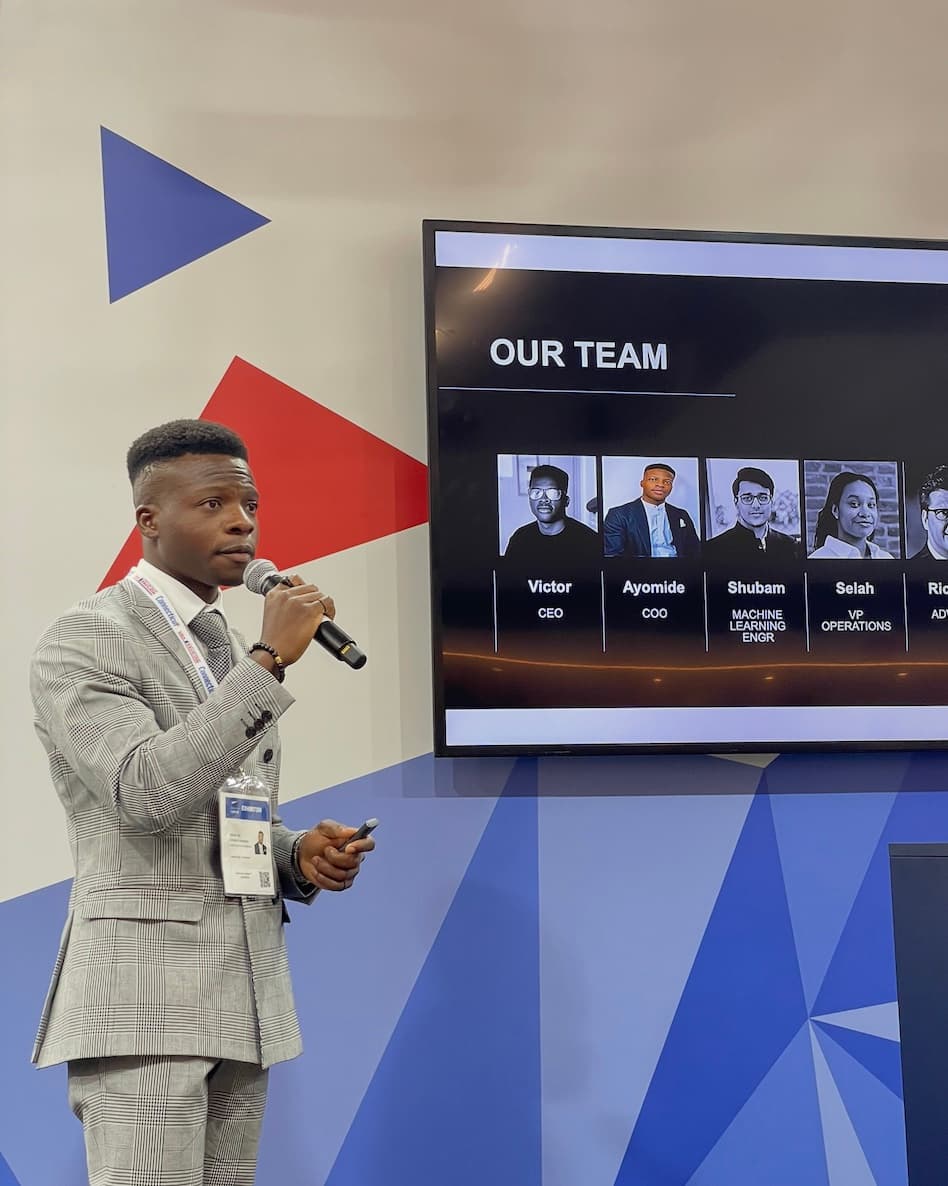
Presenting Kquika · building systems
The story behind the campaign
Ayomide Oribamise
Nigeria → Belgorod → Kansas → New York
Ayomide Oribamise grew up in Nigeria and moved to Belgorod, Russia as a teenager, where he learned Russian and began studying mechanical engineering. He later completed his engineering degree at Kansas State University.
His career moved through robotics, automation, software, and entrepreneurship before Cornell Tech. He is a Johnson Cornell Tech MBA candidate and co-founder and COO of Kquika, an AI technology company focused on aviation operations.
While living in Russia, he served for two years as President of the Nigerian student community. Those experiences shaped a belief that ran through the campaign: people can inhabit the same institution and experience it very differently, and strong communities create ways for those different perspectives to matter.